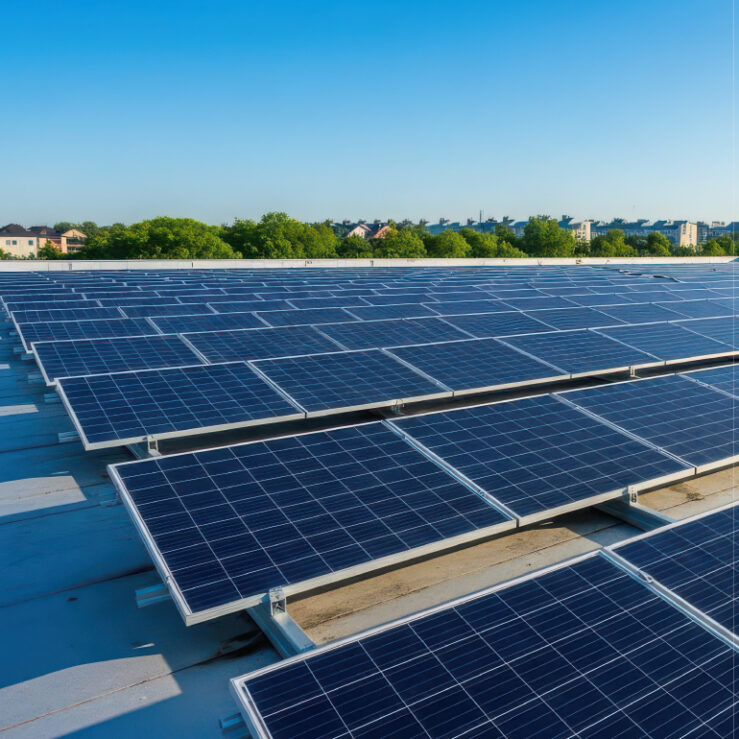
The adoption of solar photovoltaic (PV) systems across commercial buildings has accelerated significantly in recent years. Driven by sustainability targets, rising energy costs and regulatory incentives, businesses are increasingly installing solar arrays on rooftops and adjacent sites.
While PV systems deliver clear environmental and operational benefits, they also introduce specific fire safety considerations that must be integrated into commercial fire strategies. As we move through 2026, emerging data and growing industry focus make it clear that solar-related fire risks require structured, proactive management.
The Growth of Solar in UK Commercial Property
Solar panel deployment in the commercial sector continues at pace. According to the Department for Energy Security and Net Zero (DESNZ), the UK now has over 15 gigawatts (GW) of solar capacity installed across all sectors, with significant contributions from commercial rooftops and commercial land installations.
This growth reflects broader corporate commitments to net-zero targets and energy resilience. However, as installations increase, so does the need for robust fire-safety integration; particularly given the electrical nature of PV arrays and the locations in which they are often sited.
Industry Data and Fire Safety Trends
While solar panels themselves are not inherently flammable, the electrical infrastructure associated with PV systems can present ignition risks, typically arising from:
- Faulty or poorly installed equipment
- Inadequate wiring or degraded connectors
- Weather damage or maintenance activities
- Poor integration with existing building fire systems
Recent industry findings underscore the need for vigilance. Research from insurer QBE found that UK fire services attended fires involving solar panels at an average rate of once every two days in 2024, marking a 60% increase between 2022 and 2024.
The National Fire Chiefs Council (NFCC) also highlighted electrical faults as one of the leading causes of non-domestic fires in buildings containing complex electrical systems, including PV arrays.
Although solar-related incidents remain a relatively small proportion of overall commercial fires, the upward trend reflects increasing system deployment and reinforces the need for risk-appropriate planning.
BRE Launches Solar Panel Fire Safety Network
Recognising the need for clearer data and improved cross-industry collaboration, the Building Research Establishment (BRE) launched the PV Fire Intelligence Network (PV-FIN) in December 2025.
This initiative brings together fire safety professionals, manufacturers, insurers, researchers and regulators to:
- Collect and analyse solar PV fire incident data
- Identify patterns and root causes
- Develop best-practice recommendations
- Improve safety guidance for future installations
The formation of this network signals growing industry recognition that, while solar PV remains a safe and effective technology, robust fire-safety integration must evolve alongside installation growth.
Why Solar Installations Require Fire Risk Consideration
Commercial fire strategies must recognise that solar PV introduces distinct risk factors:
- Increased Electrical Complexity
PV systems operate at DC voltages that are significantly higher than standard AC building supplies. Faults in cabling, connectors or inverters can act as ignition sources if not properly designed and maintained.
- Rooftop Exposure and Access Challenges
Commercial solar arrays are typically roof-mounted. This can create access challenges for fire-response teams and complicate firefighting operations if ignition occurs near escape routes or rooftop plant areas.
- Interaction with Fire Detection and Suppression
PV installations must be coordinated with existing fire detection, alarm, compartmentation and suppression arrangements to avoid compromising overall building fire strategy.
Understanding these factors is critical for duty-holders under the Regulatory Reform (Fire Safety) Order 2005, which requires that fire risks be identified and effectively managed.
Key Fire-Safety Considerations for Duty-Holders
Commercial property owners and responsible persons must ensure that solar installations are not only energy-efficient, but also fire-safe and compliant with regulatory expectations.
Integrated Fire Risk Assessments
Fire risk assessments must explicitly include PV systems and their associated electrical infrastructure. This should cover panel placement in relation to escape routes, location and protection of inverters, junction boxes and cabling, and provisions for inspection and maintenance access.
Design and Installation Standards
Solar installations should adhere to recognised standards, including BS EN 62446 (Grid connected photovoltaic systems – Requirements for testing, documentation and maintenance). Ensuring competent design and installation remains the primary defence against electrical faults.
Co-ordination with Fire Safety Systems
PV systems must be co-ordinated with building fire detection, alarm and compartmentation strategies. Particular attention should be given to cable penetrations where PV wiring passes through fire-resisting walls, floors or roof structures. These penetrations must be appropriately fire-stopped to ensure that the integrity of the building’s compartmentation is maintained and that fire and smoke cannot spread between compartments. Clear signage identifying PV presence and isolation points is also essential to support emergency response.
Ongoing Maintenance and Competent Inspection
Regular inspection by qualified professionals helps identify wear, degradation or installation defects before they escalate into fire hazards.
Fire Safety Must Keep Pace with Electrification
As solar PV installations become more prevalent across commercial properties, associated fire risks – while manageable – must be incorporated into formal fire-safety planning. The launch of the BRE Solar Panel Fire Safety Network underscores the seriousness with which industry bodies are approaching this challenge.
By integrating PV systems into fire risk assessments, ensuring competent design and installation, coordinating with existing fire-safety systems, and adopting robust maintenance practices, duty-holders can protect both people and property while embracing the benefits of renewable energy.
Your Compliance Partner: Safeguarding People, Property and Assets
At Commercial Fire Protection, we support clients by providing structured, practical fire-safety strategies tailored to the realities of modern commercial buildings.
From comprehensive fire risk assessments and Fire Emergency Evacuation Plans (FEEPs) to detection design, compartmentation review and ongoing maintenance, our role is to help duty-holders stay compliant and safeguard people, property and assets as technologies evolve.
If your premises include solar PV installations, now is the time to review whether your existing fire-safety measures adequately reflect the risks associated with electrical generation systems.
Contact the Commercial Fire Protection team today to ensure your building’s fire strategy remains robust, compliant and aligned with current best practice.